
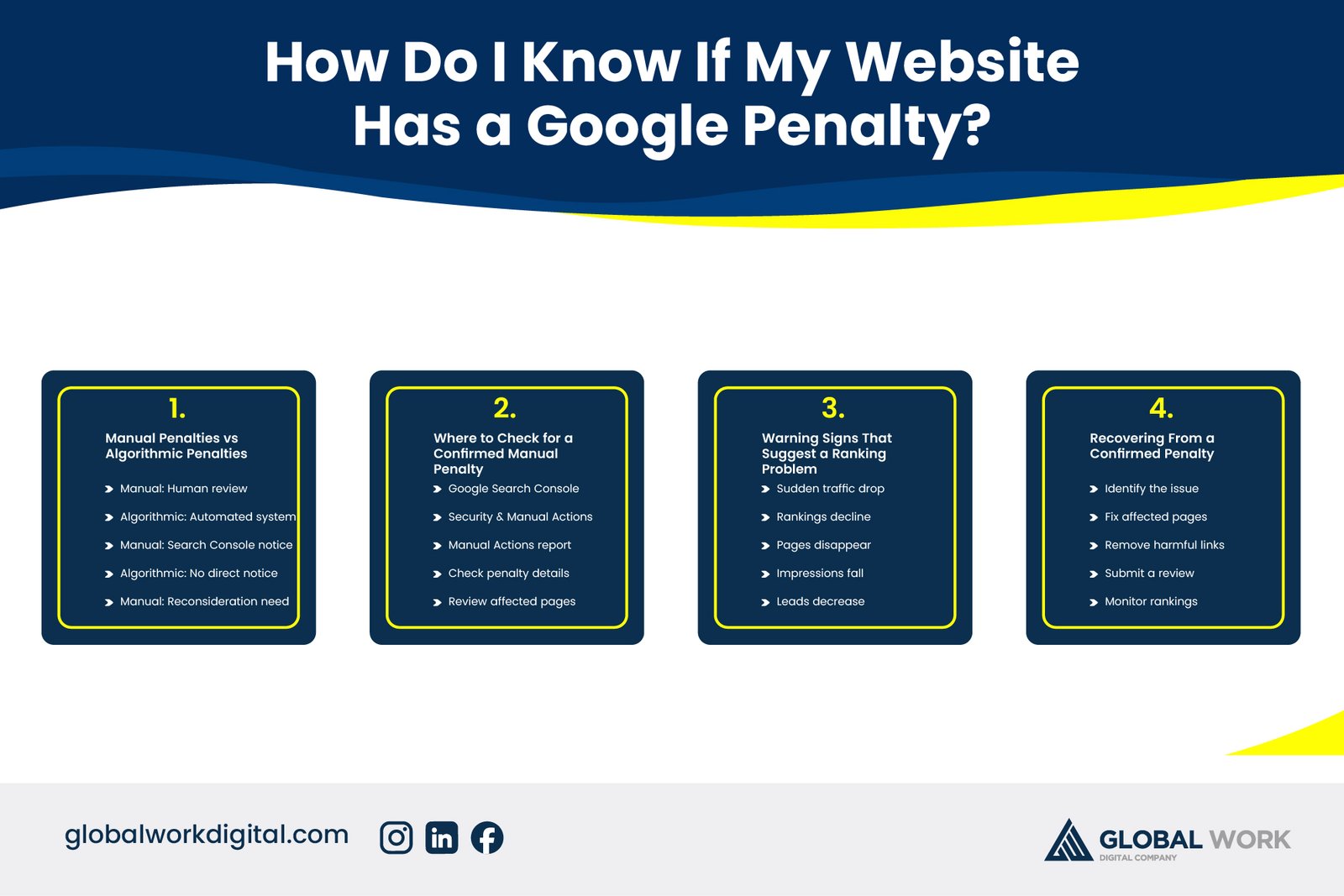
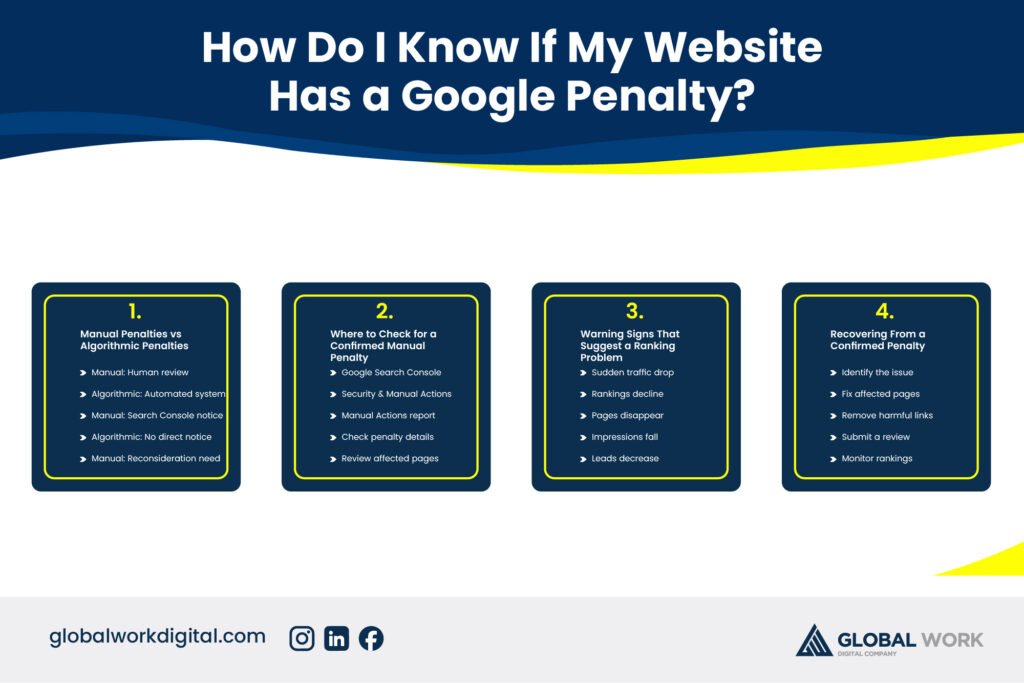
A sudden, dramatic drop in rankings or traffic often leads website owners straight to the same fear: “Did Google penalize my site?” The truth is, most ranking drops aren’t penalties at all — they’re technical errors, algorithm updates, or content issues that only look like a penalty from the outside. Knowing exactly how to check, rather than assuming, saves time and prevents unnecessary panic-driven changes that can sometimes make things worse.
This guide explains the real difference between a manual penalty and an algorithmic penalty, exactly where to check for confirmed penalty notices, the warning signs that suggest a penalty even without an official notice, and the recovery process for each type. By the end, you’ll know definitively whether your site has been penalized or whether something else is behind the drop.
Manual Penalties vs Algorithmic Penalties
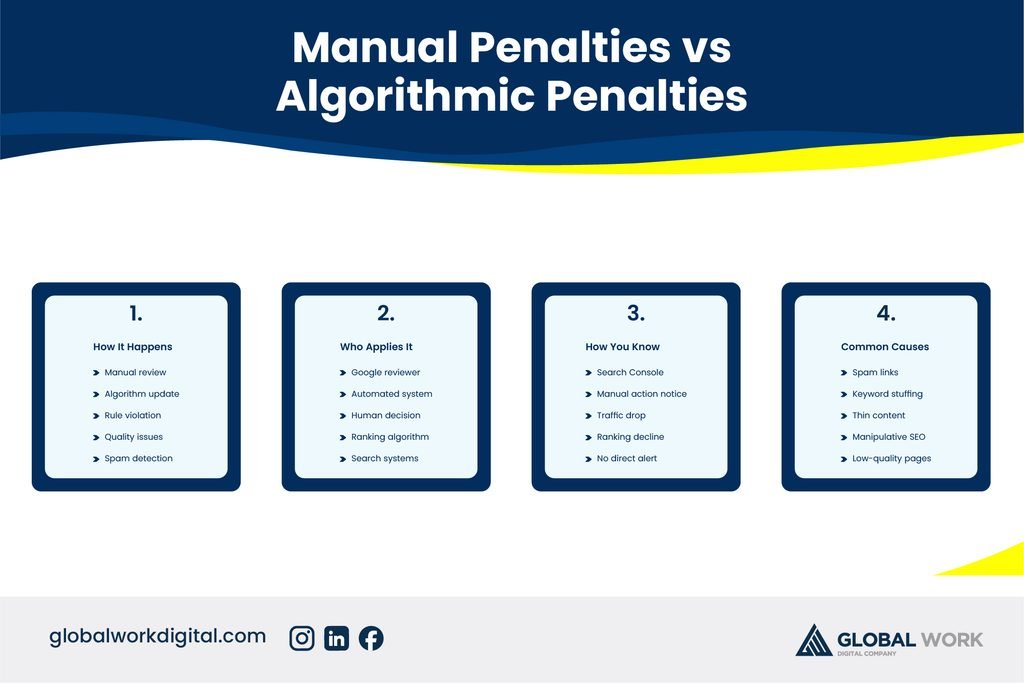
What a Manual Penalty Actually Is
A manual penalty happens when a human reviewer at Google directly reviews your site and determines it violates Google’s Search Essentials guidelines — for things like spammy backlinks, hidden text, or thin auto-generated content. Manual penalties are always confirmed through an official notice, which means you never have to guess whether one has been applied; either it’s officially documented, or it hasn’t happened.
What an Algorithmic Demotion Is
An algorithmic penalty, more accurately called a demotion, isn’t a penalty in the traditional sense — it’s simply the result of an automated algorithm update deciding your content no longer meets its updated ranking criteria. Unlike manual penalties, algorithmic demotions are never explicitly announced for individual sites, which is why so many ranking drops get mistakenly blamed on a “penalty” when they’re really just a broader ranking shift.
Where to Check for a Confirmed Manual Penalty
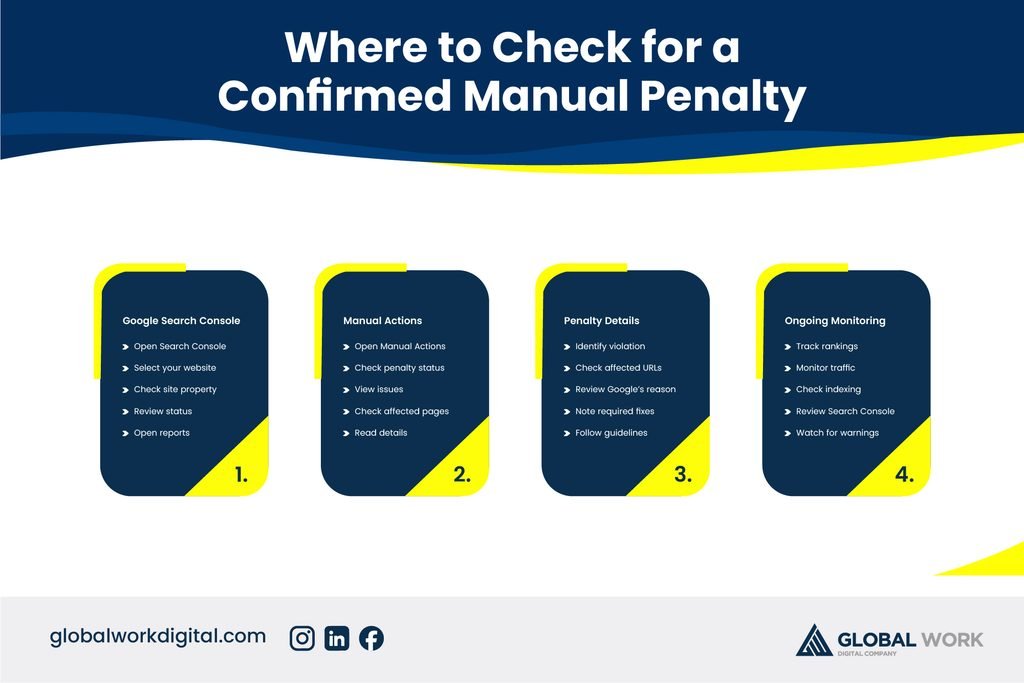
Using the Search Console Manual Actions Report
The only definitive way to confirm a manual penalty is Google Search Console’s Manual Actions report, found under the Security & Manual Actions section. If this report shows “No issues detected,” your site does not have an active manual penalty, regardless of how severe the traffic drop feels. This single check eliminates most of the guesswork around whether a penalty is actually responsible.
Understanding What the Report Tells You
If a manual action does appear, the report specifies exactly which issue triggered it — such as unnatural links, thin content, or a user-generated spam problem — along with which specific pages or the entire site are affected. This detail is critical, since the fix for a spammy backlink issue looks completely different from the fix for thin content, and treating the wrong cause won’t lift the penalty.
- Open Google Search Console and go to Security & Manual Actions
- Confirm whether any manual action is listed as active
- Read the specific reason given if one is present
- Note whether it applies site-wide or to specific pages
Warning Signs That Suggest a Ranking Problem
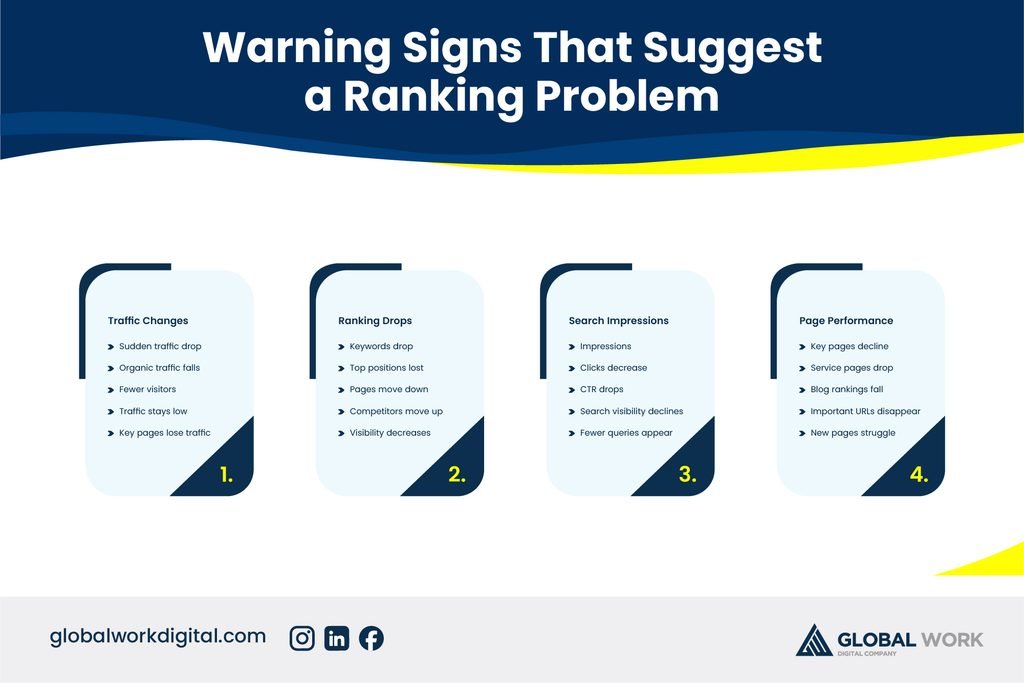
Sudden, Steep Traffic or Ranking Drops
A drop that happens quickly and affects a large portion of your site’s pages simultaneously often correlates with either a manual action or a major algorithm update, even before checking Search Console. Comparing the exact drop date against your Search Console history helps narrow down which of the two is more likely responsible.
Pages Disappearing From Search Results Entirely
If previously ranking pages vanish from search results altogether rather than simply dropping in position, this can indicate a more serious issue, including certain types of manual actions or a significant indexing problem. Checking whether these pages are still indexed at all, using Search Console’s URL Inspection tool, helps clarify whether this is a penalty-related removal or a technical indexing failure.
Recovering From a Confirmed Penalty
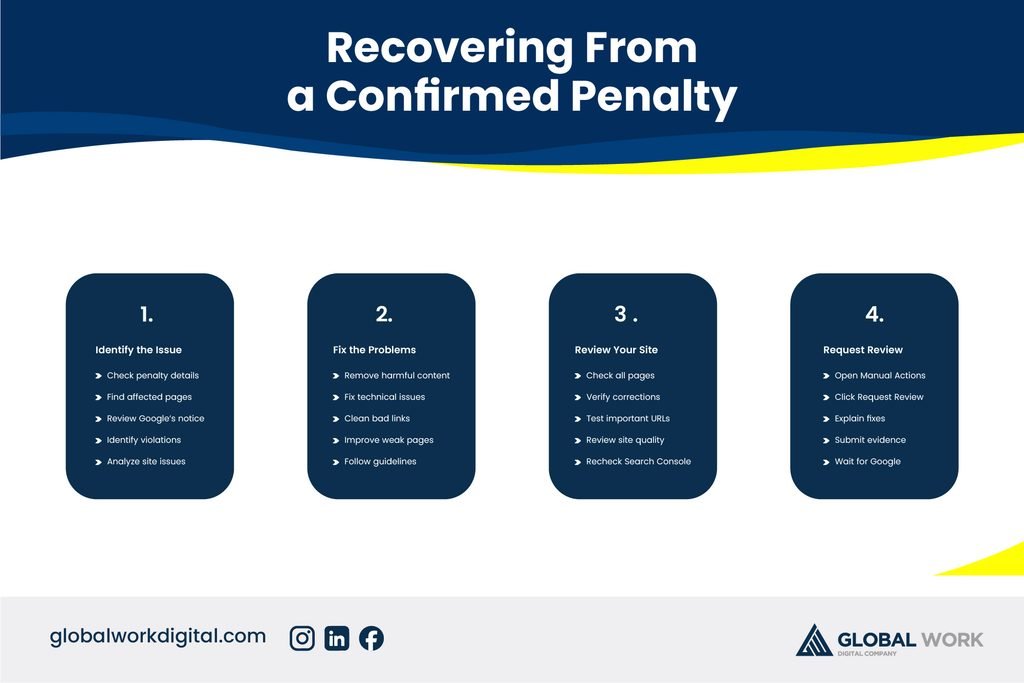
Fixing the Root Cause Before Requesting Review
If a manual action is confirmed, the fix must directly address the specific violation listed in the report — removing or disavowing unnatural links, rewriting thin or low-value content, or cleaning up user-generated spam, depending on the issue. Submitting a reconsideration request before genuinely fixing the underlying problem almost always results in rejection, so thorough remediation always comes first. Our off-page SEO guide covers how to properly audit and clean up a damaged backlink profile if that’s the source of the penalty.
Recovering From an Algorithmic Demotion
Since algorithmic demotions aren’t tied to a specific violation, recovery focuses on genuinely improving the factors the update targeted — usually content quality, expertise signals, or user experience. This process tends to be slower than manual penalty recovery, since there’s no reconsideration request to submit; instead, rankings typically improve gradually as Google’s crawlers reassess the improved content over subsequent crawl cycles.
Preventing Future Penalties
The most reliable way to avoid future penalties is following Google’s Search Essentials guidelines consistently — earning links naturally, avoiding manipulative SEO tactics, and prioritizing genuinely useful content over shortcuts designed to game rankings. Regularly auditing your backlink profile and content quality before problems accumulate is far easier than recovering after a penalty has already taken hold. Businesses that want ongoing monitoring for exactly this kind of risk often work with a dedicated SEO service to catch warning signs early rather than discovering a penalty after significant traffic has already been lost. If your traffic drop turns out not to be a penalty at all, our guide on why website traffic is decreasing covers the other most common causes to check.
Frequently Asked Questions
How do I check if Google has penalized my website?
Open Google Search Console, navigate to Security & Manual Actions, and check whether any manual action is listed. If it shows “No issues detected,” your site does not currently have a confirmed manual penalty from Google.
What’s the difference between a manual penalty and an algorithmic penalty?
A manual penalty is applied by a human reviewer at Google and is always confirmed through an official notice in Search Console. An algorithmic penalty, or demotion, happens automatically through an algorithm update and is never explicitly announced for individual websites.
Can my website lose rankings without an official penalty notice?
Yes — most ranking drops are not manual penalties at all, but rather algorithmic demotions, technical errors, or increased competition. Since these aren’t officially announced, checking Search Console for a confirmed manual action is the only way to rule out an actual penalty.
How long does it take to recover from a Google penalty?
Manual penalty recovery time varies based on how thoroughly the underlying issue is fixed and how quickly Google reviews the reconsideration request, often taking a few weeks. Algorithmic demotion recovery tends to be slower and more gradual, since it depends on ongoing content improvements being reassessed over time rather than a single review process.
What should I do if I submitted a reconsideration request and it was rejected?
A rejected request usually means the underlying issue wasn’t fully resolved. Re-review the original notice carefully, address every specific point mentioned, and confirm the fix is thorough — such as removing all unnatural links, not just some — before submitting another request.
Can a penalty affect only part of my website instead of the whole site?
Yes — some manual actions apply only to specific pages or sections rather than the entire domain, which the Manual Actions report will specify directly. In these cases, only the affected pages need remediation, though it’s still worth reviewing similar pages for the same underlying issue.